

The Hidden Power of Dehydrated Garnishes: Transforming Bar Programs One Slice at a Time
In the world of craft cocktails, where every detail matters and margins are razor-thin, bar managers face a constant challenge: how do you create exceptional experiences while maintaining profitability? The answer might be simpler than you think—and it starts with what's sitting on the rim of your glass.
Devin Chapnick, founder of Convenient Cocktail Co. and a beverage industry veteran with over 15 years of experience, has seen this challenge from every angle. From brewing beer in college to managing a $2.5 million cocktail bar in downtown Denver, his journey through hospitality has been guided by one fundamental principle: excellence and sustainability aren't mutually exclusive. In fact, constraints often fuel creativity.
His solution? Dehydrated garnishes. But this isn't just about pretty citrus wheels. It's about fundamentally rethinking how bars operate, how bartenders create, and how guests experience cocktails.
The Financial Reality of Running a Bar
Before we dive into garnishes, let's talk about money—because if bars don't make money, they don't stay open. It's that simple.
During his time as bar manager at Poka Lola Social Club in Denver, Chapnick learned this lesson the hard way. After meticulously crafting a cocktail menu with a 20% cost target, he received unexpected feedback from corporate: bring costs down to 16%. His initial reaction? Frustration. It felt like the creative craft of bartending was being reduced to "nickels and dimes."
But then something clicked. Instead of viewing constraints as limitations, Chapnick saw them as a challenge. He reworked recipes, negotiated with spirit reps, and reimagined his approach. The result? He not only hit the 16% target but eventually brought average costs down to 13.5%—all while selling $12-14 cocktails in downtown Denver and generating $2.5 million in annual revenue.
The lesson was clear: creativity thrives within constraints. You don't need expensive ingredients to create exceptional experiences. As Chapnick puts it, "Show me what you can do with a lemon, you know, like show me what you can do with just a few really easily accessible ingredients."
This philosophy became the foundation for Convenient Cocktail Co. and the broader case for why dehydrated garnishes aren't just a nice-to-have—they can be an essential tool for modern bar operations.
The Three Core Advantages of Dehydrated Garnishes
1. Consistency: The Foundation of Guest Loyalty
In the hospitality world, consistency is currency. Guests return to establishments where they know what to expect. Whether it's Chick-fil-A's identical chicken sandwiches across the country or a perfectly balanced Negroni at your local cocktail bar, reliability builds trust and loyalty.
Dehydrated garnishes deliver visual and aromatic consistency that fresh citrus simply cannot match. Every orange wheel looks the same. Every lime slice has identical thickness. There are no brown edges from yesterday's prep, no variations in size or appearance. When a guest orders their favorite drink, they get the exact same presentation every single time—regardless of which bartender is working or what produce delivery looked like that week.
But consistency goes deeper than aesthetics. Consider what happens when you place a fresh lime wedge on a drink. Some guests will squeeze it into their cocktail, adding an unknown amount of citrus juice to a carefully balanced recipe. If your recipe calls for precise lime juice measurements but guests can add more on a whim, you've introduced a variable that undermines consistency.
Dehydrated garnishes maintain the integrity of your cocktail recipes. They provide aromatic qualities without significantly altering the flavor profile over the life of the drink. This means the cocktail your bartender carefully crafted remains exactly as intended from the first sip to the last.
2. Waste Reduction: Protecting Your Bottom Line
Let's talk about the harsh reality of fresh produce in bars. You buy a case of limes. Your bartender preps them for service. At the end of the night, you throw away a quarter of them because they're already browning. The next day, you use the remainder, serving guests drinks garnished with fruit that's seen better days. This is the fresh citrus paradox: you either waste product or compromise quality.
Now consider the math from a small bar's perspective. Maybe you're running a restaurant with a modest bar program, serving 20-30 cocktails per night. You're not buying limes by the case at wholesale prices—you're paying a premium for smaller quantities. Then you're paying staff to prep them. Then you're throwing away a portion. That "cheap" fresh garnish is actually quite expensive when you factor in purchasing costs, prep labor, payroll taxes, and waste.
Dehydrated garnishes eliminate this equation entirely. They have a shelf life measured in months, not days. There's no daily prep required. Nothing goes brown. Nothing gets tossed at the end of the night. You use exactly what you need, when you need it, with zero waste.
For high-volume bars, this waste reduction scales dramatically. For smaller operations, it means you're not subsidizing your garnish program with thrown-away product and wasted labor.
3. Speed: The Hidden Revenue Generator
Here's a truth about bar operations that often gets overlooked: every second counts. If you're open for one hour with one bartender who can make 100 cocktails in that hour, every moment you shave off production time increases your earning potential.
Think about the process of garnishing with fresh ingredients. For a cherry: dig it out of syrup, maybe thread it on a skewer, place it carefully. For citrus: pull from your prep container, ensure it's not browning, position it on the rim. These are small moments, but they add up.
Dehydrated garnishes are grab-and-go. Open the container, place on drink, done. The time savings might seem minimal per cocktail, but multiply it across dozens or hundreds of drinks per night. That cumulative time translates directly to revenue—more drinks served, more guests engaged, faster table turns.
As Chapnick emphasizes, "There's nothing that tastes good about a drink that takes 20 minutes." Speed of service is itself a quality factor. A perfectly crafted cocktail that arrives promptly tastes better than an identical cocktail that takes forever. Dehydrated garnishes help bartenders maintain both quality and speed simultaneously.
The Creative Freedom Factor
Beyond the operational and financial benefits, dehydrated garnishes unlock something more intangible but equally valuable: creative freedom for your bartenders.
Imagine a guest sits at your bar and asks for something exciting, something tropical. Your bartender wants to make them a Fog Cutter garnished with an array of tropical fruits. With fresh ingredients, this becomes a calculation: Do we have pineapple? How much will we waste if I chop up a whole pineapple for one drink? Can I justify the cost?
With dehydrated garnishes, the answer is always yes. Your bartenders have an expanded toolkit at their disposal without worrying about waste or cost implications. They can create beautiful, elaborate presentations on the fly. They can experiment with flavor combinations. They can respond to guest preferences with genuine creativity rather than being constrained by inventory concerns.
This freedom matters because cocktails are, at their core, collaborative experiences. The best drinks come from bartenders who have the autonomy to react to their guests, to make meaningful choices, to create moments of discovery. As Chapnick reflects on his early experiences at the Mai-Kai tiki bar in Florida: "The most impactful [hospitality] is when your guests and you as a hospitality provider are creating moments of discovery."
Dehydrated garnishes make creativity efficient. They remove barriers to experimentation while maintaining the operational discipline necessary for profitability.
The Onboarding and Training Advantage
Staffing challenges plague the hospitality industry. Finding qualified bartenders is difficult. Training new staff is time-consuming and expensive. And yet, guests expect consistent quality regardless of who's behind the bar.
Dehydrated garnishes significantly ease the training burden. For someone new to bartending, one of the most challenging aspects is learning proper garnishing techniques—cutting citrus to the right thickness, creating uniform twists, making drinks look professional and appealing. These skills take time to develop.
With dehydrated garnishes, you've removed a significant variable from the training equation. New bartenders can produce drinks that look just as professional as those made by your most experienced staff. The barrier to entry drops, onboarding becomes faster, and quality remains consistent even as team members cycle through.
For bar managers juggling training responsibilities alongside all their other duties, this matters enormously. Every hour not spent teaching garnish technique is an hour available for teaching cocktail recipes, hospitality skills, or the other nuanced aspects of excellent service.
Elevating Without Excluding
The word "elevated" gets thrown around constantly in the hospitality industry, often to justify high prices or inaccessible experiences. But true elevation isn't about marble floors and crystal chandeliers—it's about making guests feel they received more value than they paid for.
Dehydrated garnishes embody this principle perfectly. They represent visible effort and intention. Guests can see that someone took the extra step of dehydrating this citrus wheel rather than simply slicing it fresh. There's a clear signal of care and craftsmanship. Yet this elevation doesn't come with a premium price tag or an attitude of exclusivity.
As Chapnick puts it: "Elevated doesn't inherently mean fancy, and fancy for fancy's sake is very unappealing to me." A dehydrated garnish on a $12 cocktail at a neighborhood bar can deliver that same sense of intention and care as a $20 cocktail at a high-end establishment. The elevation is democratized.
This matters in an era where justifying cocktail prices becomes increasingly difficult. Consumers are savvier about costs and value. A $16-20 cocktail is a harder sell than ever. But if that cocktail arrives looking spectacular, tasting balanced, and feeling like genuine care went into its creation—all at a $12-14 price point—you've created real value. And value, more than anything else, keeps guests coming back.
The Practical Reality: Cost Analysis
Let's address the elephant in the room: aren't dehydrated garnishes just another cost? Don't they make drinks more expensive?
The answer is counterintuitive. When you factor in all the true costs of fresh garnishes—premium pricing on small quantities, prep labor, payroll taxes, and waste—dehydrated garnishes often cost less per drink. They might seem more expensive upfront (buying a bag of dehydrated citrus versus a few limes), but the math shifts when you account for:
Zero waste: You use exactly what you need with no spoilage
No prep labor: Your bartenders aren't spending paid hours slicing citrus
Consistent portioning: Each garnish is identical, making cost tracking precise
Extended shelf life: You can buy in larger quantities without worry
Elimination of quality compromises: No serving drinks with browning citrus
For bars not yet tracking costs with a detailed calculator, Chapnick offers a plea: start now. Understanding your true costs is essential for making smart purchasing decisions. Guesswork doesn't make money, and you need money to stay open.
Getting Started: A Strategic Approach
For bar managers interested in incorporating dehydrated garnishes, the key is starting with cost awareness. Before changing your garnish program, understand what you're currently spending—including the hidden costs of labor and waste.
Then experiment thoughtfully. You don't need to overhaul your entire program overnight. Start with your highest-volume cocktails or the garnishes that create the most waste. Track the results. Compare costs, guest feedback, and operational efficiency.
The beauty of dehydrated garnishes is their simplicity. They're not a complicated technology or a difficult technique. They're just a smart operational choice that happens to look great and work efficiently.
The Bigger Picture: What Hospitality Really Is
Stepping back from the operational details, dehydrated garnishes represent something larger about the nature of hospitality itself. We're not just selling drinks—we're selling feelings. We're creating experiences that make people feel cared for, excited, valued.
You can make drinks at home. You can cook food at home. You can even pour nice wine for friends at home. But the feeling of true hospitality—of a stranger making you feel genuinely taken care of in exchange for your hard-earned money—that's special. That's what brings people out of their homes and into bars and restaurants.
As Chapnick reflects: "Even when we no longer need money, we will still want to leave our house and go someplace where a stranger that we do not know will give us food and drink and make us feel like we're taking care of. And that's just very special."
Dehydrated garnishes are a tool in service of that larger mission. They remove barriers. They create consistency. They enable creativity. They make it easier for bartenders to deliver that feeling of being cared for, drink after drink, night after night.
In an industry built on slim margins and intense competition, any tool that helps you deliver better experiences more efficiently isn't just nice to have—it's essential. Dehydrated garnishes might seem like a small detail, but small details add up to memorable experiences. And memorable experiences are what keep people coming back.
The question isn't whether dehydrated garnishes can improve your bar program. The question is: what's stopping you from trying them?
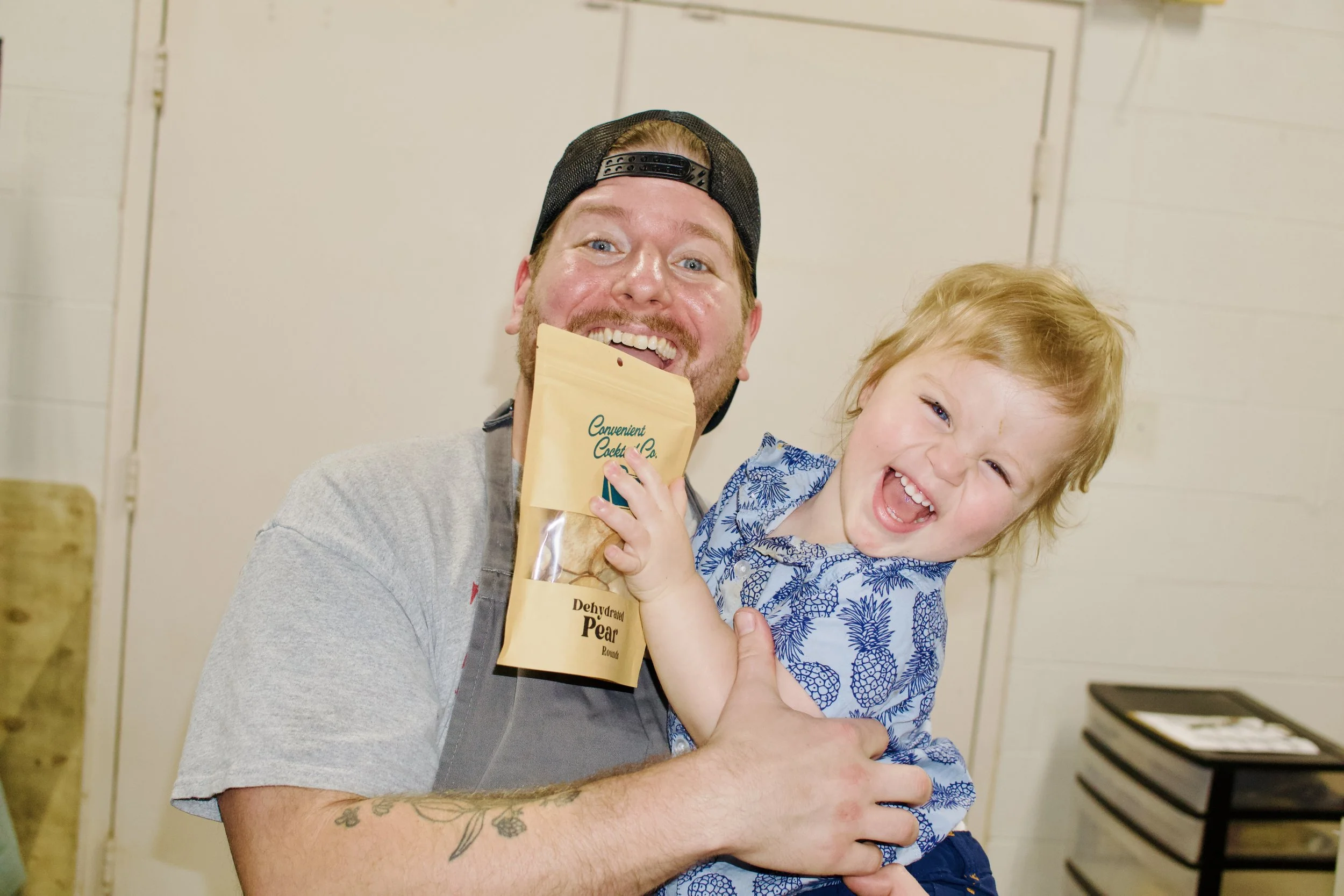
Devin Chapnick has over 15 years of experience in the beverage industry. Bartender, bar manager, consultant, entrepreneur, he’s done it all. He’s the founder of Convenient Cocktail Co based in Chattanooga, TN, and has a passion for helping bars and restaurants implement programs that actually turn a profit while maintaining a creative edge.